Digmi Chen | Product Designer UX Strategy Design Systems

Resume

Digmi Chen | Product Designer UX Strategy Design Systems

Resume

Digmi Chen

Resume

TIIKITI

TIIKITI

TIIKITI

What if tickets were verified before they were ever sold?

What if tickets were verified before they were ever sold?

What if tickets were verified before they were ever sold?

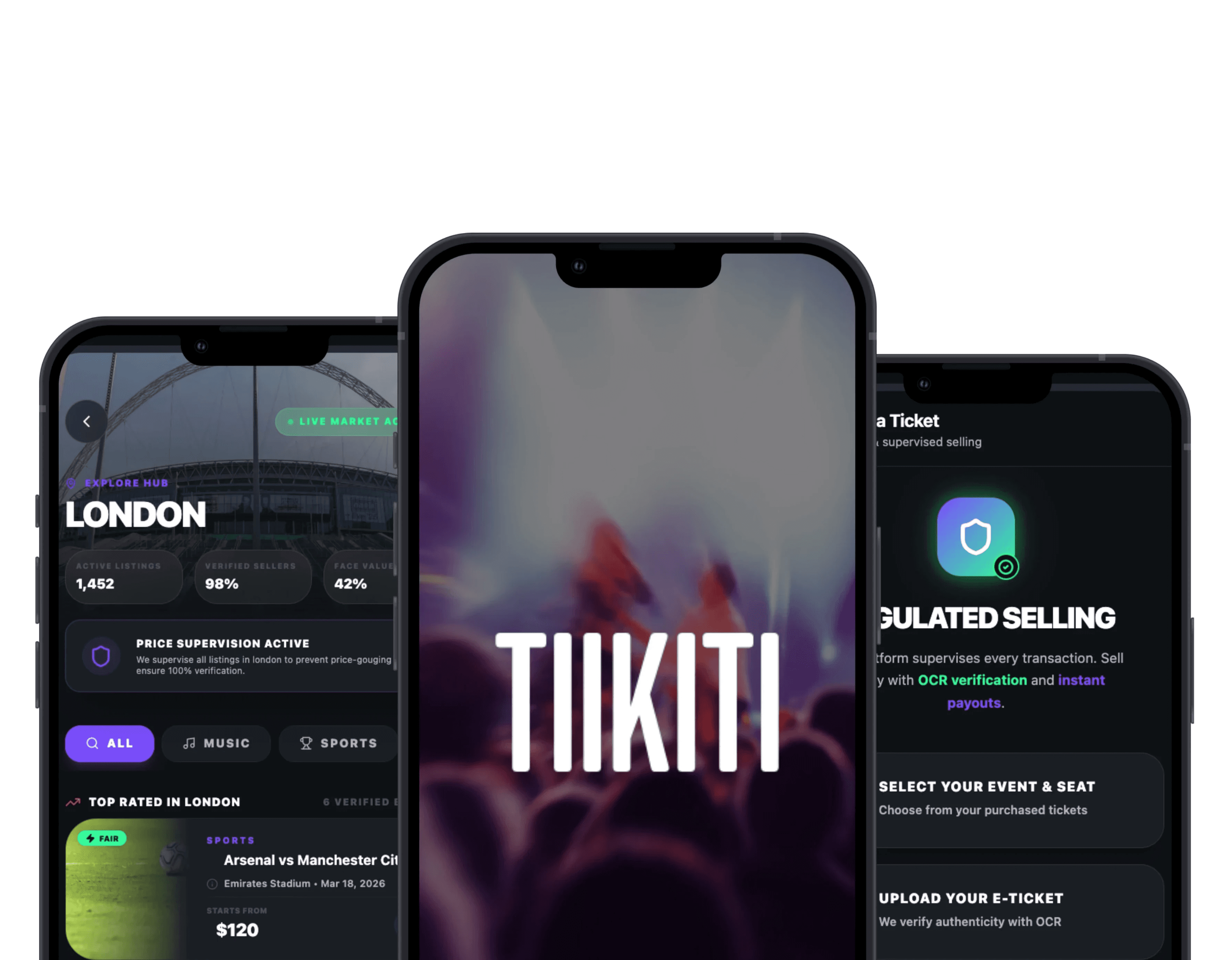
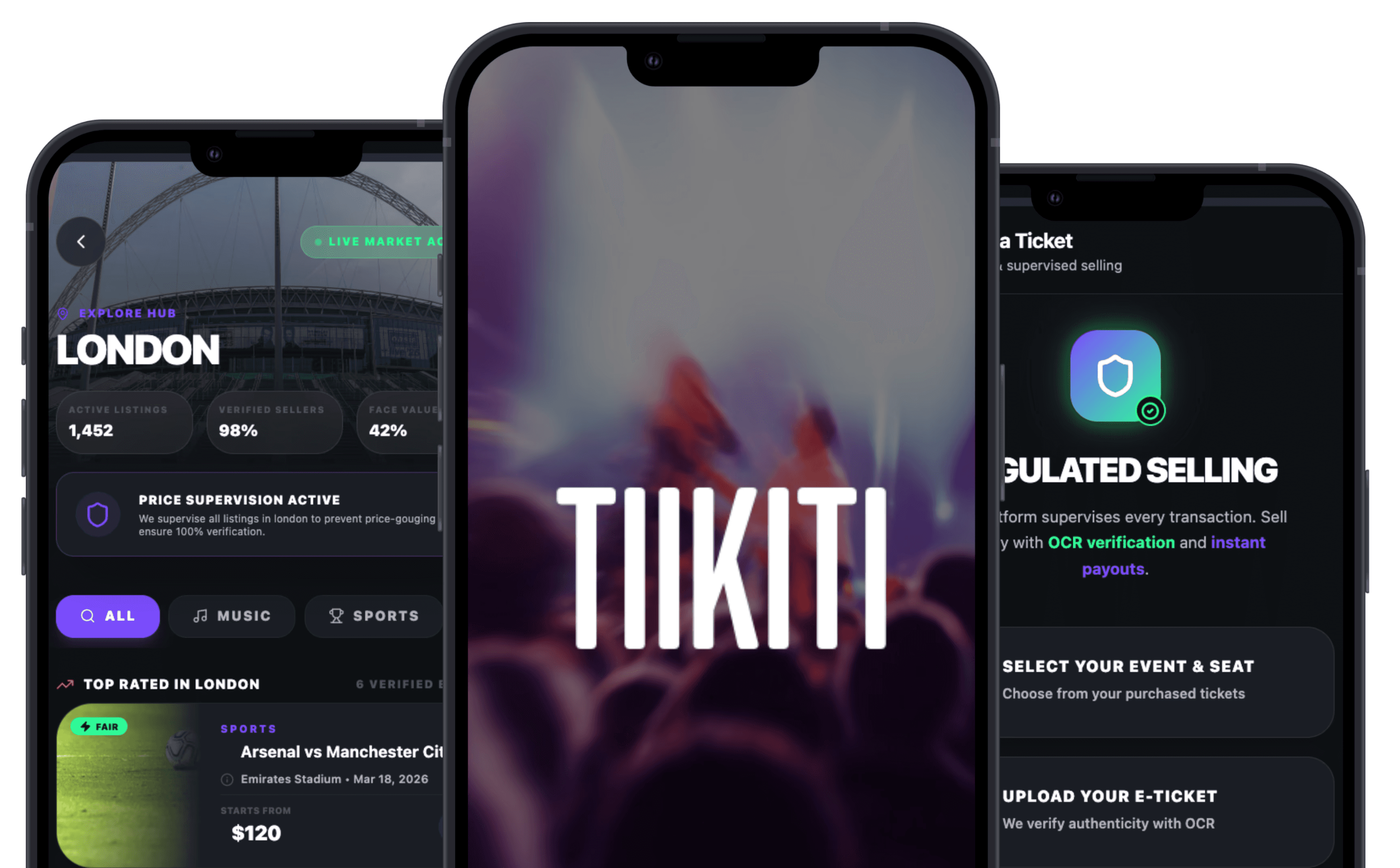
Designing a safer second-hand ticket resale experience.

Designing a safer second-hand ticket resale experience.

Designing a safer second-hand ticket resale experience.

TL;DR 

A product design case study exploring how early verification, pricing transparency, and buyer protection can reduce anxiety in high-risk resale purchases.

A product design case study exploring how early verification, pricing transparency, and buyer protection can reduce anxiety in high-risk resale purchases.

My Role : 

Product Designer (Strategy, UX, UI)

Platform : 

Mobile

Duration :

12 weeks

User Pain in the Real World

User Pain in the Real World

Buying second-hand tickets often requires making fast, high-stakes decisions with limited information.

Through interviews and research, recurring frustrations emerged: fake or invalid tickets, last-minute price inflation, and unclear responsibility when purchases fail.

Beyond the financial loss, these failures carry a strong emotional cost, missed events, embarrassment at venue entry, and loss of trust in resale platforms.

Buying second-hand tickets often requires making fast, high-stakes decisions with limited information.

Through interviews and research, recurring frustrations emerged: fake or invalid tickets, last-minute price inflation, and unclear responsibility when purchases fail.

Beyond the financial loss, these failures carry a strong emotional cost, missed events, embarrassment at venue entry, and loss of trust in resale platforms.

Buying second-hand tickets often requires making fast, high-stakes decisions with limited information.

Through interviews and research, recurring frustrations emerged: fake or invalid tickets, last-minute price inflation, and unclear responsibility when purchases fail.

Beyond the financial loss, these failures carry a strong emotional cost, missed events, embarrassment at venue entry, and loss of trust in resale platforms.

Real-world coverage illustrating the emotional and financial impact of failed ticket resales.

Insights

Pricing uncertainty creates pressure, not trust

Buyers often discover additional fees only at the final step of checkout, forcing them to make emotional decisions under time pressure.

Design decision:

We surfaced full price breakdowns before users commit - during discovery and listing - rather than at checkout.

Fear of counterfeit tickets shifts risk to the buyer

Many users arrive at venues with tickets that appeared valid online, only to be rejected at entry - when it’s already too late.

Design decision:

We chose to require ticket verification before a listing can go live, rather than relying on post-purchase or venue-level checks.

When platforms avoid accountability, trust collapses

In failed purchases, buyers are often left without clear responsibility or recourse, eroding trust in resale platforms.

Design decision:

We embedded buyer protection directly into the transaction flow, with visible safeguards, escrow, and dispute handling.

These insights directly shaped the core product principles and interaction decisions that follow.

Design principles shaped by key insights

Principles that guided product and interaction decisions throughout the Tiikiti experience.

Transparency before commitment

Users should understand the full cost and conditions of a ticket before making an emotional commitment.

How this principle shows up

We surfaced complete price breakdowns and resale terms during discovery and listing - not at checkout.

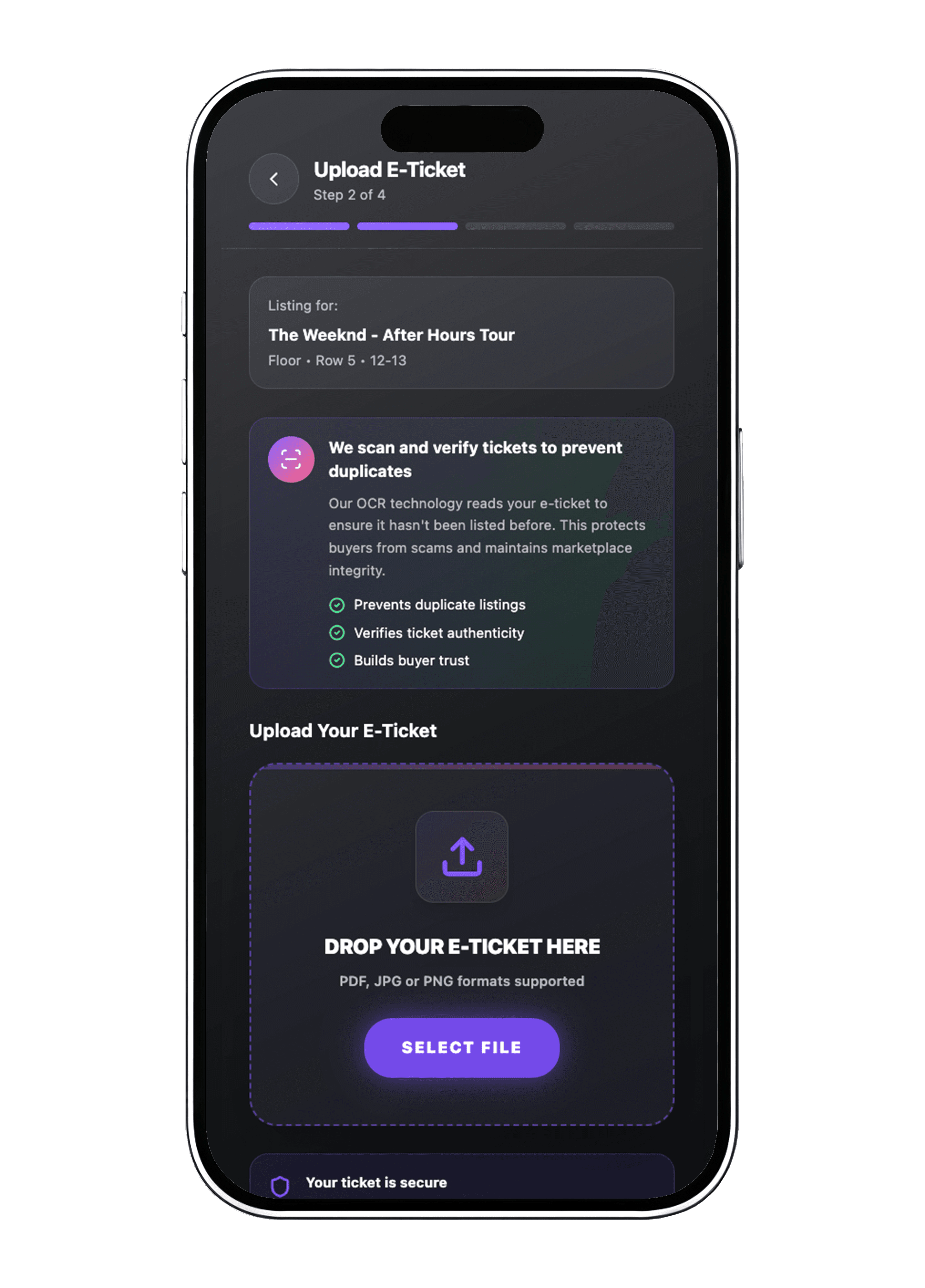
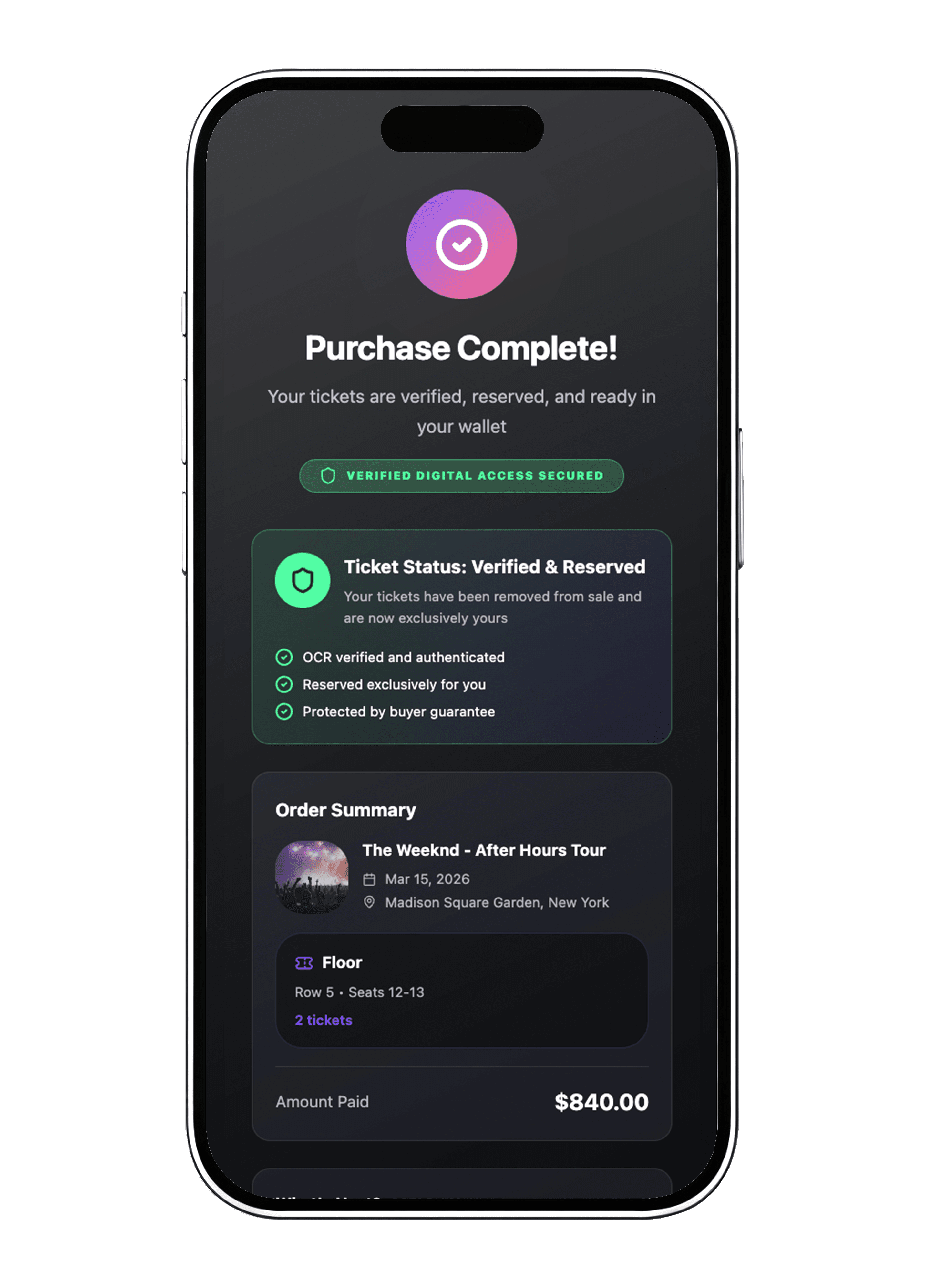
Verification as part of the UX, not a backend feature

Ticket authenticity should be clear and understandable to users, not hidden behind backend processes.

How this principle shows up

Verification states and validity indicators are integrated directly into browsing, seat selection, and listing flows.
Reduce emotional pressure in high-stakes decisions through visible safeguards

In emotionally charged purchases, interfaces should reduce urgency and support confident decision-making.

How this principle shows up

Calm layouts, clear comparisons, and guided flows replace urgency-driven patterns and last-minute surprises.

My Role : 

Product Designer (Strategy, UX, UI)

Platform : 

Mobile

Duration :

12 weeks

Goal :

To address the core problems of the second-hand ticket market - lack of trust, inflated fees, and buyer uncertainty

by rethinking the resale experience from a user-first perspective.

Solution :

Tiikiti is a digital marketplace for buying and selling second-hand tickets, built around ticket verification, transparent pricing breakdowns, and buyer protection mechanisms that create a safer resale experience.

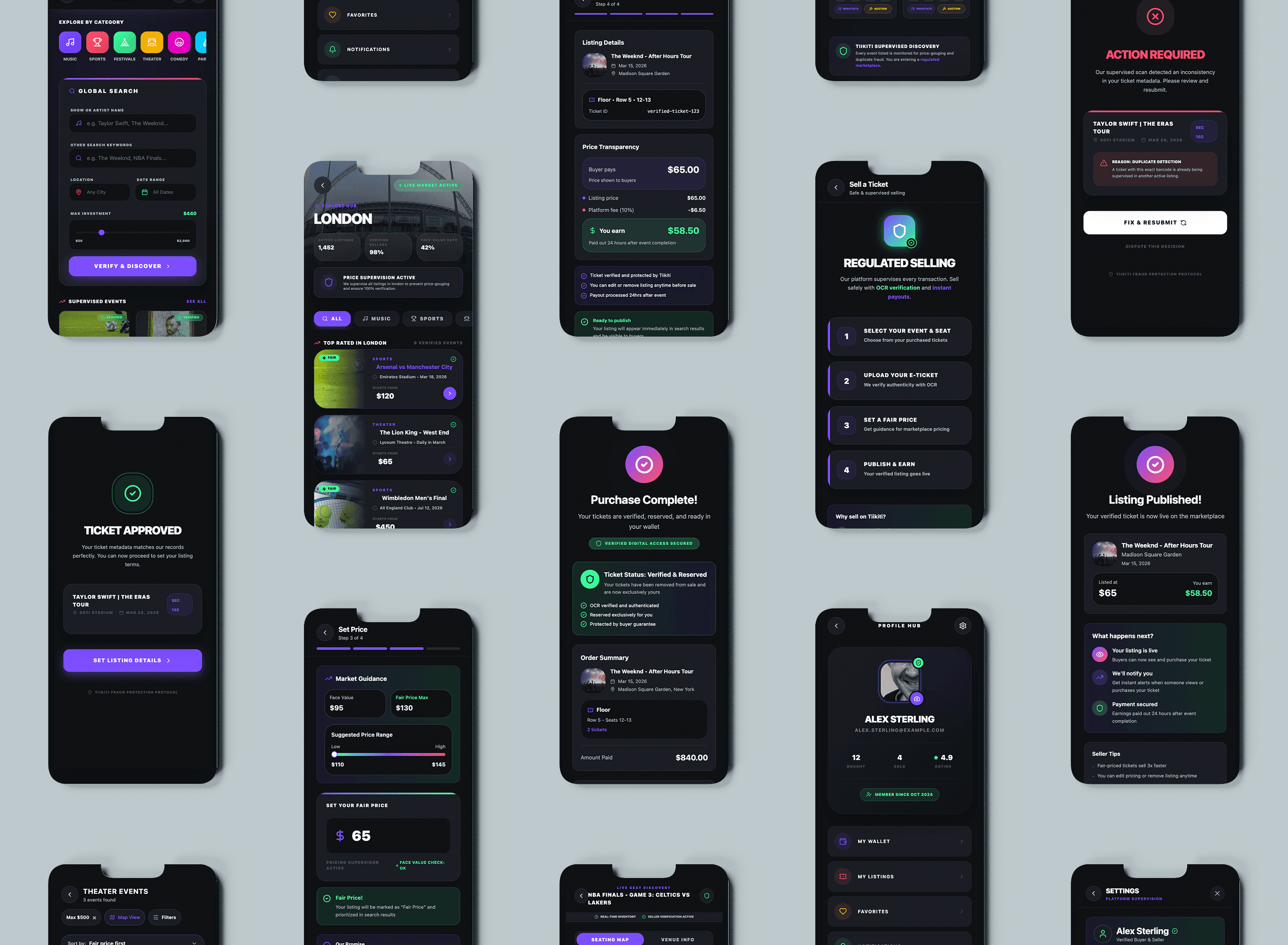
From uncertainty to confidence - end to end flow

From uncertainty to confidence - end to end flow

An overview of the core flows designed to reduce risk and emotional pressure throughout the resale journey.

An overview of the core flows designed to reduce risk and emotional pressure throughout the resale journey.

Who we designed for and why

Who we designed for and why

These personas represent recurring behavioral patterns used to validate the core principles and end-to-end flow.

These personas represent recurring behavioral patterns used to validate the core principles and end-to-end flow.

YOSSI, 34 | SPORTS FAN

“I love going to football games, but I’ve been burned by counterfeit tickets twice. I don’t trust resale sites anymore.”

Design Relevant Needs

  • Prioritizes trust and verified sellers as main decision factors.

  • Wants a secure platform with clear refund policies.

  • Willing to pay slightly more for guaranteed authenticity and peace of mind.

DANA, 29 | MARKETING

“I wanted to surprise my partner with concert tickets, but by the time I found them, prices had doubled. I bought anyway, but it felt like I was being scammed.”

Design Relevant Needs

  • Values transparent and fair pricing over “bidding wars” or hidden fees.

  • Stresses importance of instant ticket confirmation to avoid purchase anxiety.

  • Expresses frustration with fake listings and missing event details.

DANA, 29 | MARKETING

“I wanted to surprise my partner with concert tickets, but by the time I found them, prices had doubled. I bought anyway, but it felt like I was being scammed.”

Key Findings

  • Values transparent and fair pricing over “bidding wars” or hidden fees.

  • Stresses importance of instant ticket confirmation to avoid purchase anxiety.

  • Expresses frustration with fake listings and missing event details.

RINA, 22 | STUDENT

“I tried to resell a ticket when I couldn’t attend, but it took days to process, and I ended up losing money.”

Design Relevant Needs

  • Emphasizes need for easy, fast resale options.

  • Prefers mobile-first solutions for quick listing and transfer.

  • Values community features (chat, support, simple buyer-seller interaction).

OMER, 40 | EVENT ORGANIZER

“When resold tickets cause entry problems, it damages our reputation too. We need a platform that works with event hosts, not against them.”

Design Relevant Needs

  • Wants integration with official ticketing systems.

  • Notes the importance of fraud prevention to protect both fans and organizers.

  • Supports data transparency to track ticket transfers legally.

OMER, 40 | EVENT ORGANIZER

“When resold tickets cause entry problems, it damages our reputation too. We need a platform that works with event hosts, not against them.”

Key Findings

  • Wants integration with official ticketing systems.

  • Notes the importance of fraud prevention to protect both fans and organizers.

  • Supports data transparency to track ticket transfers legally.

How the system enforces trust behind the scenes

How the system enforces trust behind the scenes


Ticket Verification & Purchase – End to End Sequence

Ticket Verification & Purchase – End to End Sequence

User Flow Diagram - Selling & Buying Verified Tickets

User Flow Diagram - Selling & Buying Verified Tickets

What this case study demonstrates

  • Measuring how early verification impacts conversion vs. abandonment.

  • Exploring trust calibration — how much reassurance is enough without overwhelming users.

  • Adapting the model to event-host integrations and official ticketing partners.


This project reflects my approach to product design: combining behavioral insight, system thinking, and interface clarity to reduce risk in complex user decisions.

  • Measuring how early verification impacts conversion vs. abandonment.

  • Exploring trust calibration — how much reassurance is enough without overwhelming users.

  • Adapting the model to event-host integrations and official ticketing partners.


This project reflects my approach to product design: combining behavioral insight, system thinking, and interface clarity to reduce risk in complex user decisions.

What didn’t we solve (yet)

Platform-level challenges beyond UX

  • Upstream ticket verification dependencies

    Full verification at scale depends on cooperation with official ticket issuers, event hosts, and venue systems.

    While this case study assumes access to verification APIs or OCR-based validation, real-world implementation would require commercial partnerships, regulatory alignment, and data-sharing agreements beyond the scope of product design alone.


  • Balancing verification rigor with listing speed

    Strong verification increases trust, but may introduce friction for sellers in time-sensitive resale scenarios.

    Further exploration is needed to optimize this balance without reintroducing urgency-driven pressure.


  • Trust signaling across different user segments

    Buyers, sellers, and organizers respond differently to reassurance and safeguards.

    Further validation would be required to calibrate trust signals dynamically across buyer, seller, and organizer contexts.


What this opens up next

  • Exploring issuer-backed verification or transfer protocols

  • Defining platform incentives for official integrations

  • Evaluating regulatory and regional constraints on resale verification

Platform-level challenges beyond UX

  • Upstream ticket verification dependencies

    Full verification at scale depends on cooperation with official ticket issuers, event hosts, and venue systems.

    While this case study assumes access to verification APIs or OCR-based validation, real-world implementation would require commercial partnerships, regulatory alignment, and data-sharing agreements beyond the scope of product design alone.


  • Balancing verification rigor with listing speed

    Strong verification increases trust, but may introduce friction for sellers in time-sensitive resale scenarios.

    Further exploration is needed to optimize this balance without reintroducing urgency-driven pressure.


  • Trust signaling across different user segments

    Buyers, sellers, and organizers respond differently to reassurance and safeguards.

    Further validation would be required to calibrate trust signals dynamically across buyer, seller, and organizer contexts.


What this opens up next

  • Exploring issuer-backed verification or transfer protocols

  • Defining platform incentives for official integrations

  • Evaluating regulatory and regional constraints on resale verification

Create a free website with Framer, the website builder loved by startups, designers and agencies.